
Maintaining comfortable temperatures in industrial and commercial environments can be challenging, particularly in large, open, or high-heat spaces. Conventional air conditioning may require extensive installation, significant energy consumption, and enclosed environments to deliver effective cooling. For businesses that need fresh air circulation and flexible temperature management, evaporative cooling offers an alternative worth considering.
Portable cooler air conditioning uses water evaporation to reduce incoming air temperature and distribute cooled air where it is needed. Portable evaporative coolers can support targeted cooling without requiring permanent ductwork, making them useful for different commercial and industrial applications. Understanding how these systems work, their benefits, and the factors that influence performance can help businesses choose an appropriate cooling solution.
What Is Portable Cooler Air Conditioning?
Portable cooler air conditioning refers to a movable cooling unit that uses evaporative technology to deliver cooled air into a selected area. Unlike conventional portable air conditioners, which use refrigerant-based cooling, evaporative coolers draw warm air through water-saturated pads to reduce its temperature. They are particularly suitable for well-ventilated spaces where fresh air circulation is important.
Understanding Portable Evaporative Cooling Systems
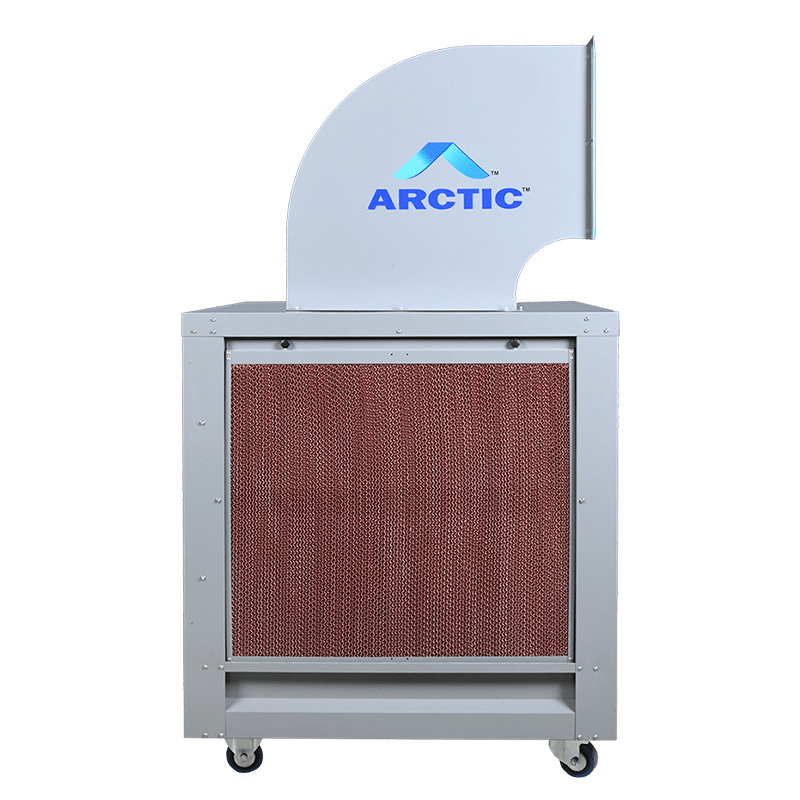
A portable evaporative cooling system combines a fan or blower, cooling pads, a water circulation arrangement, and a housing that supports airflow. Many units are designed with castor wheels or other mobility features, allowing them to be repositioned according to changing cooling requirements. Their suitability depends on the required airflow, operating conditions, and available ventilation.
How Portable Air Coolers Work
The unit draws warm air through damp cooling media. As water evaporates, it absorbs heat from the passing air, lowering its dry-bulb temperature. A fan or blower then pushes the cooled air into the surrounding area. This process works best when the space allows warm, humid air to escape rather than allowing moisture to accumulate.
Key Components of a Portable Cooling Unit
The main components include evaporative cooling pads, a fan or centrifugal blower, a water tank, a pump, and an air discharge outlet. The cooling pads provide the surface needed for evaporation, while the pump circulates water across them. The blower moves air through the unit and directs it towards the required area. The body protects the internal components and supports the overall structure.
Portable Evaporative Coolers vs. Conventional Portable AC Units
Portable evaporative coolers and conventional portable air conditioners use different cooling technologies. Evaporative units rely on water evaporation and generally supply fresh outdoor air. Refrigerant-based portable AC units transfer heat through a refrigeration cycle and typically require exhaust arrangements to release heat outside. Evaporative cooling is often more suitable for open or ventilated areas, while conventional AC may be preferable for enclosed spaces requiring controlled temperatures and humidity.
How Does a Portable Evaporative Air Cooler Work?
Understanding the cooling process helps explain why airflow, water circulation, and ventilation are important. An evaporative cooler does not simply circulate existing indoor air. It draws air through a cooling medium and delivers the treated airflow into the space.
Drawing Warm Outdoor Air Into the Unit
The cooling unit uses a fan or blower to draw surrounding warm air through its air intake openings. Some designs use multiple intake sides to increase the available air entry area. Consistent airflow is necessary for the cooling pads to perform effectively.
The Role of Water-Saturated Cooling Pads
Cooling pads hold and distribute water across a large surface area. As warm air passes through the wet media, evaporation takes place and heat is absorbed from the air. Pad thickness, surface area, water distribution, and condition all influence the cooling process.
How Evaporation Reduces Air Temperature
Evaporation converts liquid water into water vapour by absorbing heat from the surrounding air. This reduces the air’s dry-bulb temperature while increasing its moisture content. The achievable temperature reduction depends largely on the difference between the dry-bulb and wet-bulb temperatures of the incoming air.
Delivering Fresh and Cooled Air Into the Space
After passing through the cooling pads, the air is delivered through the unit’s discharge outlet. Discharge design and blower performance influence the direction and distance of the airflow. Adequate ventilation allows warmer air and excess moisture to leave the building, supporting more effective cooling.
Benefits of Portable Cooler Air Conditioning for Businesses
Portable evaporative cooling can offer practical advantages for businesses that need flexible air distribution. Its effectiveness depends on the environment, but the technology can be a useful option for targeted cooling and improved air movement.
Flexible Cooling for Different Work Areas
Portable units can be moved between suitable work areas when cooling requirements change. This flexibility is useful for spaces where fixed cooling arrangements are difficult to install or where only selected zones need additional airflow. The unit’s weight, dimensions, and mobility features should be considered before selection.
Lower Energy Consumption Compared to Conventional AC
Evaporative coolers generally use less energy than conventional refrigeration-based air conditioning because they do not operate a compressor. Their electricity consumption is primarily associated with the fan or blower and water pump. Actual savings depend on the equipment selected, operating hours, local electricity costs, and cooling requirements.
Improved Air Circulation and Fresh Air Supply
Unlike recirculating systems, evaporative coolers introduce outdoor air into the occupied space. This can help improve air movement and reduce the accumulation of stale indoor air when suitable exhaust ventilation is provided. Proper airflow planning is essential to achieve the intended result.
Convenient Installation and Mobility
Many portable coolers are designed for straightforward installation and operation. Ductless models can deliver cooled air directly into the surrounding area without requiring permanent duct networks. This can make them practical for facilities that need a flexible cooling arrangement.
Targeted Cooling for High-Heat Environments
Focused air delivery can help provide cooling near workstations, machinery zones, and other areas with specific heat loads. Selecting a unit with suitable airflow and throw is important to ensure that the cooled air reaches the intended location.
Where Can Portable Evaporative Coolers Be Used?
Portable evaporative coolers can serve a variety of industrial and commercial environments, particularly where open ventilation and direct airflow are possible. Their suitability should be evaluated according to the space layout, humidity conditions, and cooling objectives.
Factory Floors and Manufacturing Units
Manufacturing areas may contain machinery and processes that contribute to local heat buildup. Portable coolers can provide targeted airflow in suitable work zones. The selected unit should account for heat generation, worker locations, and the need to remove warm air from the building.
Warehouses and Storage Facilities
Large warehouses can be difficult to cool uniformly because of their size and open layouts. Portable units may provide additional airflow in selected areas, although their coverage depends on air throw, obstacles, ceiling height, and ventilation.
Workshops and Production Areas
Workshops often have changing layouts and localised cooling needs. Portable coolers can be repositioned to support airflow near work areas, provided the surrounding environment is suitable for evaporative cooling.
Commercial Kitchens and Hospitality Spaces
Kitchens and hospitality facilities can experience heat from cooking equipment and high occupancy. Portable cooling may help improve air movement in appropriate areas. Placement should account for ventilation arrangements, hygiene requirements, and proximity to heat-producing equipment.
Retail Stores and Large Open Areas
Retail outlets, commercial complexes, and other open spaces may benefit from additional air circulation. The cooling unit should be selected according to the floor layout, customer areas, and the availability of fresh-air movement.
Portable Coolers vs. Fixed Industrial Cooling Systems
Both portable and fixed cooling systems can support commercial and industrial temperature management, but they serve different installation and operating requirements. The right choice depends on the size of the facility and whether cooling is needed throughout the building or only in selected areas.
Differences in Installation Requirements
Portable units generally require less installation work because they can operate without permanent ducting. Fixed industrial systems may involve duct networks, structural planning, electrical arrangements, and dedicated installation work. Portable models offer flexibility, while fixed systems can provide planned air distribution across multiple zones.
Comparing Cooling Coverage and Air Delivery
A portable cooler delivers air directly from its outlet, making it suitable for localised cooling. Fixed systems can distribute air through multiple outlets to serve larger or more defined areas. Compare airflow capacity, throw distance, and room layout before deciding.
Energy Consumption and Operating Considerations
Portable evaporative coolers typically have simpler operating requirements than refrigeration-based systems. However, energy consumption varies with fan size, blower type, pump operation, and usage duration. Fixed systems may offer more structured control across larger spaces, depending on their design.
When Is Portable Cooling More Practical?
Portable cooling can be practical when a facility needs flexible spot cooling, does not require uniform temperature control throughout the building, or cannot accommodate extensive ductwork. For whole-building cooling, a properly designed fixed system may be more appropriate. Explore the product specifications to identify an option that suits your facility, and contact the team to discuss your cooling requirements.
How to Choose the Right Portable Cooling Unit
Choosing a suitable unit requires more than comparing product prices. Airflow capacity, cooling coverage, power requirements, construction, and maintenance should all be assessed in relation to the operating environment.
Evaluating Room Size and Cooling Requirements
Start by identifying the area that needs cooling and whether the requirement is localised or spread across the entire space. Consider ceiling height, heat-generating equipment, occupancy, ventilation, and the number of units that may be needed.
Understanding Airflow Capacity and CMH Ratings
Airflow is commonly measured in cubic metres per hour (CMH). A higher CMH rating indicates a greater volume of air delivered per hour, but it does not automatically guarantee better cooling in every space. Air throw, outlet direction, obstructions, and ventilation also affect performance.
Considering Cooling Pad Quality and Efficiency
Cooling pad surface area, thickness, material, and water distribution influence evaporation performance. Look for clear product specifications and consider how easily the pads can be inspected and maintained.
Checking Water Tank Capacity and Power Requirements
Tank capacity affects how frequently water may need replenishment, while electrical requirements determine compatibility with the available power supply. Check the unit’s power rating, connection requirements, and operating instructions before installation.
Assessing Mobility, Maintenance, and Durability
Consider the unit’s construction, castor wheels, access to internal components, and availability of replacement parts. A durable body and accessible maintenance points can support easier long-term operation.
Factors That Affect Portable Evaporative Cooling Performance
Even a well-selected cooler may not deliver the same results in every environment. Performance depends on atmospheric conditions, airflow management, water quality, and equipment maintenance.
Outdoor Temperature and Relative Humidity
Evaporative cooling generally performs better in hot, dry conditions. As relative humidity increases, the air has less capacity to absorb additional water vapour, reducing the potential temperature drop. The wet-bulb temperature is a useful indicator when evaluating expected cooling performance.
Airflow and Ventilation Requirements
The unit needs an adequate supply of air and a suitable path for warm, moisture-laden air to escape. Without sufficient exhaust ventilation, indoor humidity can rise and reduce comfort.
Cooling Pad Condition and Water Quality
Dirty, damaged, or scaled cooling pads can interfere with water distribution and airflow. Water containing high mineral content may contribute to scale buildup, making routine inspection and suitable water management important.
Placement of the Portable Cooling Unit
Position the cooler where its air intake remains unobstructed and its discharge can reach the intended area. Avoid placing it where walls, equipment, or stored materials block airflow. Consider nearby exhaust openings to support air movement through the space.
Portable Cooler Maintenance and Operating Best Practices
Regular maintenance helps preserve airflow, cooling performance, and equipment condition. Following the manufacturer’s instructions is important because cleaning requirements and maintenance intervals can vary by model.
Cleaning and Inspecting Cooling Pads
Inspect pads for dirt, scale, damage, and uneven water distribution. Clean or replace them according to the manufacturer’s guidance. Avoid harsh cleaning chemicals that may damage the cooling media.
Maintaining Water Distribution Systems
Check the pump, water lines, and distribution channels to ensure that water reaches the pads evenly. Remove deposits and clear blockages when necessary to maintain consistent wetting.
Checking Fans, Motors, and Electrical Components
Inspect the fan, blower, motor, wiring, and control components at recommended intervals. Any unusual vibration, noise, or electrical issue should be assessed by a qualified technician.
Preventing Scale Formation and Unwanted Odours
Regularly inspect the water tank and circulation system for mineral deposits and stagnant water. Follow recommended draining and cleaning procedures to reduce scale buildup and unwanted odours.
Scheduling Regular Preventive Maintenance
Create a maintenance schedule based on operating hours, environmental conditions, and manufacturer recommendations. Routine checks can help identify developing problems before they affect cooling performance.
Frequently Asked Questions
Is portable cooler air conditioning suitable for industrial spaces?
Yes. Portable evaporative coolers can be suitable for well-ventilated industrial spaces that need targeted cooling and fresh air circulation. The unit’s airflow capacity, cooling coverage, and operating environment should be evaluated before selection.
How much area can a portable evaporative cooler cover?
Coverage varies according to the model, airflow capacity, air throw, ceiling height, layout, and ventilation. Always refer to the manufacturer’s design specifications rather than relying on a general coverage estimate.
Does a portable evaporative cooler work in humid weather?
It can operate in humid conditions, but cooling effectiveness generally decreases as humidity rises. Evaporative cooling works best when the incoming air has a sufficient wet-bulb depression.
Is a portable air cooler more energy-efficient than an AC?
Evaporative coolers generally consume less electricity than conventional portable AC units because they do not use a compressor. However, they provide a different type of cooling and are not suitable for every indoor environment.
How often should a portable evaporative cooler be maintained?
Maintenance frequency depends on usage, water quality, dust levels, and manufacturer recommendations. Cooling pads, water tanks, pumps, and electrical components should be inspected regularly.
Conclusion
Portable cooler air conditioning can be a practical option for businesses that need flexible, targeted cooling in well-ventilated commercial and industrial spaces. By using water evaporation to reduce incoming air temperature, these units can support fresh air circulation without requiring permanent ductwork. Their performance depends on suitable humidity conditions, adequate ventilation, correct sizing, and regular maintenance.
When selecting a unit, consider airflow capacity, cooling coverage, pad quality, water tank size, power requirements, and construction. ARCTIC offers portable and spot cooling solutions, including free-flow top discharge air coolers designed for focused air delivery without permanent ducting.